





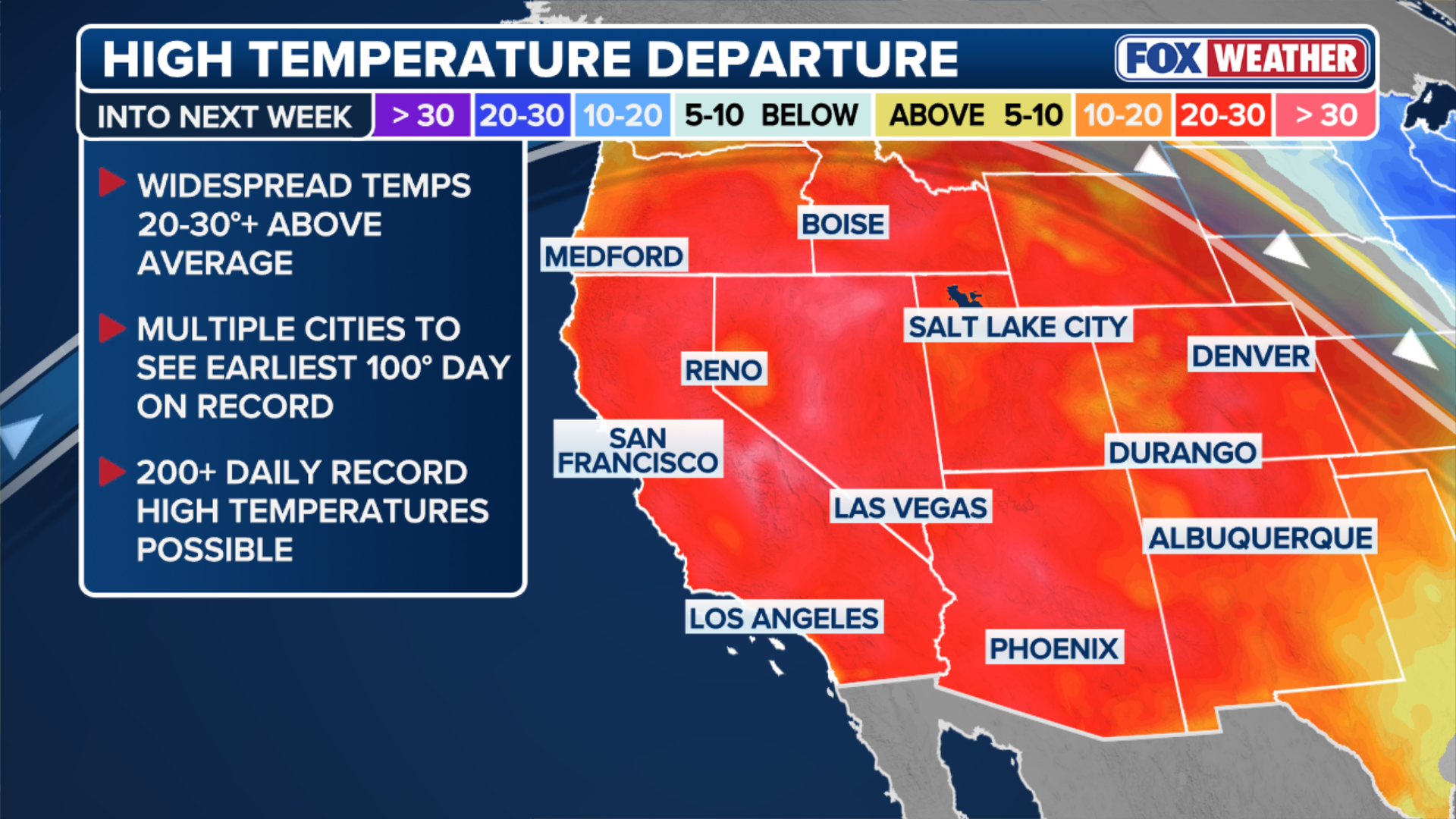
The FOX Forecast Center is tracking the most intense March heat wave ever observed in the U.S. which is baking the western U.S. The heat will peak Friday and Saturday across parts of California, Arizona and New Mexico, with more than 40 million people under heat alerts. Thermal, California, reached 108 degrees Thursday, tying the record for warmest recorded March temperature in U.S. history. Phoenix hit 105 degrees Thursday, which is now its warmest March day on record. The record heat will expand into the Plains states this weekend.
The FOX Forecast Center is tracking the most intense March heat wave ever observed in the U.S., which is currently baking the West as it expands farther into the Plains through the weekend.
Thermal, California, in the Coachella Valley reached 108 degrees Thursday, tying the record for warmest recorded March temperature in U.S. history.
The unprecedented heat is expected to peak Friday and Saturday across California, the Southwest, and parts of the Great Plains, with conditions running as much as 35 degrees above average for this time of year.
KNOW YOUR HEAT TERMINOLOGY: EXTREME HEAT WARNING, EXTREME HEAT WATCH AND HEAT ADVISORY

(FOX Weather)
More than 40 million people across Southern California and the deserts of Nevada and Arizona are under Extreme Heat Warnings and Heat Advisories through Sunday.
The early scorching temperatures are also expected to further deplete the snowpacks across western mountain ranges — many of which were already running significant deficits after a winter with little snow. These snowpacks are a critical water source for many communities during the summer.
Even as the most intense heat subsides, relief will not be immediate.
HOW TO WATCH FOX WEATHER

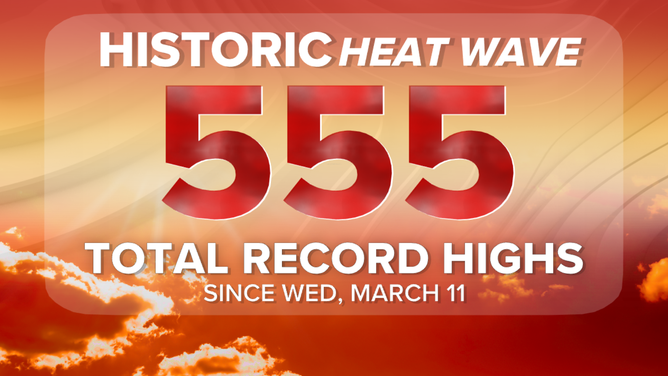
More than 550 record highs have been set since Mar. 11, with dozens more expected to be shattered through next week, the FOX Forecast Center said.
ALLERGY SEASON IS WORSE THAN EVER. HERE ARE THE 10 WORST ALLERGY CAPITALS IN THE US FOR 2026
Phoenix hit 105°F on Thursday and —along with at least 60 other locations — has recorded its warmest March day during this heat wave.
The heat first arrived in the West on Monday and Tuesday and brought at least 47 new daily records to California and Oregon.
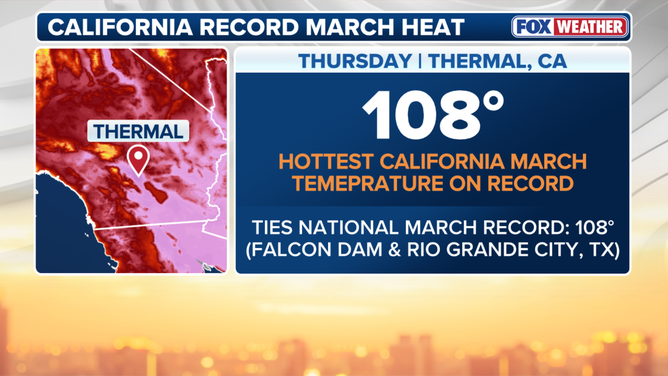
Thermal, California, reached 108 degrees Thursday, tying the record for warmest recorded March temperature in U.S. history.
(FOX Weather / FOX Weather)
According to the FOX Forecast Center, the heat wave is caused by a ridge of high pressure aloft, which acts like a lid on a boiling pot, preventing the warm air from escaping.
This “heavy” high-pressure lid further warms the air below it — a process called adiabatic warming.
Phoenix is expected to climb to 106 degrees Friday, while both Las Vegas and Los Angeles could surpass the century mark. If downtown Los Angeles reaches 100 degrees, it will break the record of 99 degrees which has stood since 1879.
SARGASSUM SURGE RETURNS WITH SEAWEED BLOB MOVING TOWARDS POPULAR BEACHES JUST IN TIME FOR SPRING BREAK
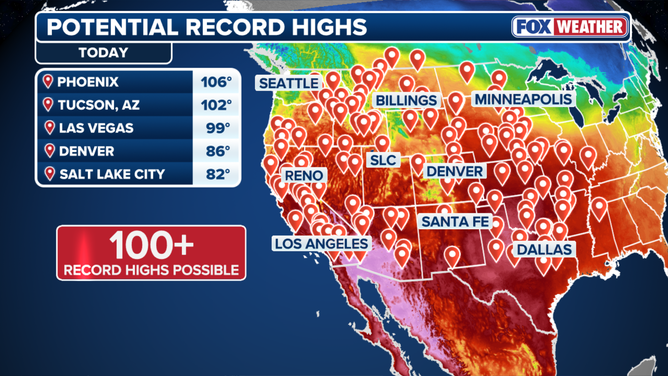
More than 100 record-high temperatures possible Friday.
(FOX Weather / FOX Weather)
The record heat is also reaching higher elevations.
Sacramento is forecast to reach 90 degrees Friday. It would be the first 90 degree March day in the city’s history.
Flagstaff, Arizona, which is 7,000 feet above sea level, rocketed to 83 degrees Thursday, that city’s warmest recorded March day.
MARCH SKYWATCHING GUIDE: CATCH A BLOOD MOON, PLANET CONJUNCTION, AURORAS, AND MORE
Denver is forecast to reach the mid-80s, nearly 30 degrees above the March average for a city that often sees blizzards in March.
Salt Lake City and Reno, Nevada, are among more than 100 locations expected to challenge their all-time March highs on Friday.
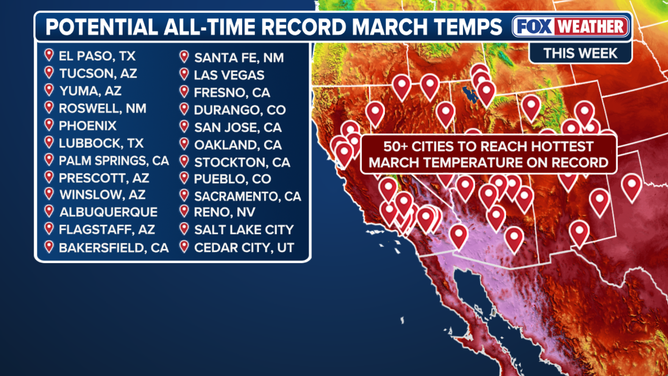
Potential all-time record March temperatures.
The FOX Forecast Center said even after Saturday, the heat will linger, with some places potentially breaking daily temperature records for seven days straight, a rare occurrence.
Phoenix, Los Angeles and Las Vegas are all under Extreme Heat Warnings through Sunday.
WHAT IS A RIP CURRENT AND HOW TO SURVIVE ONE
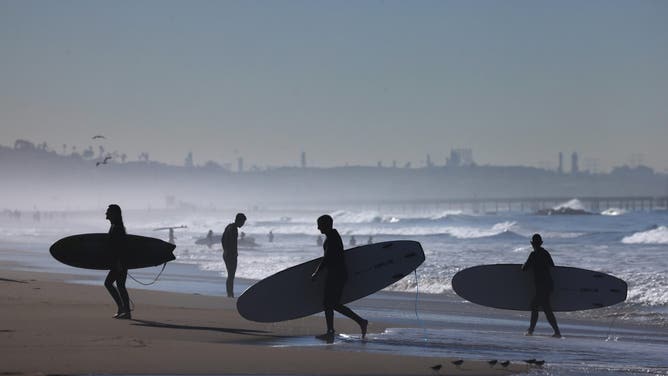
SANTA MONICA, CA – MARCH 13, 2026 Surfers make their way through the early morning mist after catching a few waves in Santa Monica on March 13, 2026.
(Genaro Molina/Los Angeles / Getty Images)
People across coastal California have flocked to beaches to take advantage of the unusual extra warmth.
San Francisco’s Department of Emergency Management reminded residents to only swim at beaches with a lifeguard, and use extreme caution as ocean water is cold and currents are strong.
The Los Angeles County Office of Emergency Management also reminded people to use caution in the extreme heat, sharing heat safety tips and resources for locals.
HERE’S WHAT YOU NEED TO KNOW TO STAY SAFE AT THE BEACH DURING SPRING BREAK
Reduced snowpacks across the California Sierra and Intermountain West have already led to ski seasons ending early, and now the excess heat is likely to melt a lot more of the remaining snow.
Because the western U.S. relies on snowpack as a “natural reservoir” that slowly releases water through July, this premature spike in temperature is essentially draining the region’s water bank account months too early, the FOX Forecast Center said.
HOW TO WATCH FOX WEATHER
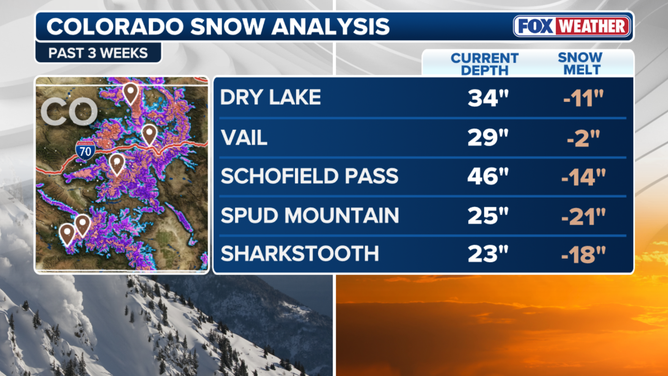
As the snow disappears a month early, high-elevation vegetation will begin drying out much sooner, extending the 2026 wildfire season by four to six weeks.
Temperatures across the West are expected to remain slightly higher than average through at least early April, according to the National Weather Service Climate Prediction Center’s long-range forecast.


