


A flood of recent social media posts described hormonal birth control pills as cancer causing.
“The WHO has just released a statement labeling birth control pills as a Group 1 cancer-causing agent,” one conservative commentator wrote March 8 on X. His post was viewed more than 2.2 million times.
Leading Report, a conservative account that describes itself as a “leading source for breaking news” but often shares misinformation, posted what it called “breaking news” that the World Health Organization’s International Agency for Research on Cancer lists birth control pills as a “Group 1” carcinogen.
That’s alarming. And it’s not entirely inaccurate — but it’s also more nuanced than what the posts say.
There’s a lot to know about birth control pills and cancer risk. Yes, scientific evidence shows that birth control pills can increase the risk of some types of cancers. Research also shows that taking the pill decreases the risk of some cancers. And although the WHO classified the pill as a cancer risk, it did so 25 years ago — this is not new. None of this means that if you’ve been taking the pill for years you’re certainly going to get cancer.
Before switching contraceptives, here’s some information to consider.
How do birth control pills work?
The most common birth control pills use hormones estrogen and progestin to block conception. This medication is often colloquially called “the pill” and it is sometimes referred to as combined birth control pills. The combined hormones stop or reduce ovulationan ovary’s release of an egg, and make it harder for sperm to enter the uterus and reach an egg. They also thin the uterus’ lining, making it more difficult for a fertilized egg to grow there.
Progestin-only birth control pills, also known as mini pills, work similarly but about half of people using the mini pill still ovulate.
What does the World Health Organization say about the pill and cancer?
A 2025 WHO fact sheet on oral contraceptives described them as “one of the most effective ways to prevent unintended and high-risk pregnancies” and “a major public health achievement” that has improved women’s health and reduced maternal mortality.
The WHO also wrote that oral contraceptives have a “complex association with cancer risk.”
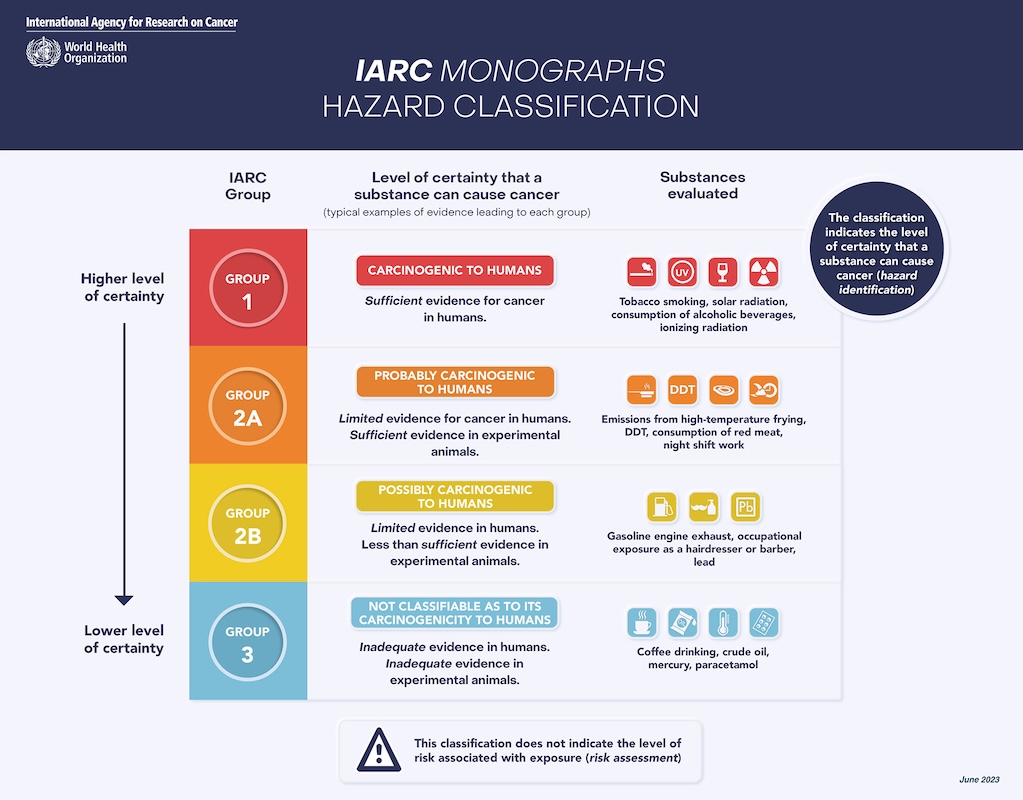
The International Agency for Research on Cancer, a WHO group that identifies hazards known to cause cancer in humans, in 1999 classified the pill as a carcinogen because it said there’s sufficient evidence demonstrating it causes some types of cancer.
The same year, and in subsequent reviewsthe agency highlighted research showing that taking the pill can reduce the risk of endometrial and ovarian cancer.
The World Health Organization’s logo is seen at the group’s Geneva headquarters. (AP)
Why does the WHO classify the pill as carcinogenic?
That WHO group’s 1999 report on hormonal contraception concluded that birth control pills containing both estrogen and progestin fall within its “Group 1: Carcinogenic to humans” classification. The agency reaffirmed that finding in 2008when it determined there’s sufficient evidence the pills can cause breast, cervical and liver cancer.
Agency spokesperson Veronique Terrasse said the hazard classification is based on the strength of the evidence showing something causes cancer at some exposure levels or in some circumstances. But it does not say anything about specific risk, which varies depending on the exposure types, exposure levels and a person’s unique profile.
That’s how the pill wound up in the same category as other “Group 1” cancer-causing hazards such as asbestos, solar radiation and alcoholic beverage consumption. It also explains how smoking tobacco and secondhand tobacco smoke exposure are both classified as “Group 1” carcinogens.
That they share the same classification does not mean that taking birth control pills is as likely to cause cancer as regularly smoking cigarettes.
Two hazards (such as asbestos and the pill) in the same group should not be compared, Terrasse said. Such comparisons can be misleading because there is so much variety when it comes to exposure types, and personal risk levels.
(Courtesy of World Health Organization)
What does more recent research say?
Research since 2008 has continued to show that taking birth control pills increases the risk of certain cancers such as breast and cervical cancer while lowering the risk of others like ovarian cancer.
A 2024 Frontiers in Global Women’s Health study found that people using hormonal contraceptives, including intrauterine devices, had a higher risk of cervical cancer compared with nonusers. The study also said people taking combined birth control pills who have mutations to their BRCA1 and BRCA2 tumor suppressor genes also have a higher breast cancer risk.
That same 2024 study found that hormonal contraceptive users had a lower risk of ovarian and endometrial cancer.
What’s the best way to consider the risks and benefits, then?
Given the conflicting information, it’s important to consider the absolute health risks of developing cancer or becoming pregnant — not just the potential increased risk that comes with the pill.
The National Cancer Institute says about 0.6% of women will be diagnosed with cervical cancer at some point in their life.
That means even if, for example, the risk of cervical cancer is 50% higher for people taking combined birth control pills, that’s still a risk of less than 1%, said Liz Borkowski, deputy director at the Jacobs Institute of Women’s Health. People can also reduce their cervical cancer risk by getting the HPV vaccine and regular screening tests, she said.
Ultimately, people should consider their health and risk factors, lifestyle habits and thoughts on pregnancy when deciding what contraception to use.
“A key thing to remember about contraception is that it’s supposed to prevent pregnancy,” Borkowski said. “So people need to compare the side effects and risks of any method they’re considering against the many elevated health risks that accompany pregnancy, and factor in how well the method prevents pregnancy and how important it is to them to not get pregnant at this point in their life.”
RELATED: Breast cancer and birth control: New study shows how science can be distorted
RELATED: Elon Musk says there’s ‘scientific consensus’ on birth control depression, suicide risk. He’s wrong.
