


José Trejo López thought the immigration agent separated him from his brother Josué so the officer could ask more questions during a March check-in in New York City.
José and Josué, 20 and 19 years old at the time, had been to dozens of Immigration and Customs Enforcement check-ins in the nearly 10 years since they fled El Salvador as children with their mother. The appointments often took all day and sometimes required missing school and final exams. José felt embarrassed to tell his teachers and classmates where he was going, but also knew he had to fulfill his immigration obligations and maintain good conduct and his arrest-free record.
“You have to follow the law, because when you follow the law things go well, right?” José said.
That day, José heard the rattle of handcuffs. The officer told him not to make a scene. As Josué turned and saw his older brother restrained, a different officer handcuffed him, too.
By the time the brothers had walked into ICE’s field office for their 8 a.m. appointment, about two months into President Donald Trump’s second administration, rumors swirled that immigration agents were detaining people at routine immigration check-ins. These appointments are typically for people with pending immigration cases who aren’t considered threats to the public.
Detaining people at check-ins became part of Trump’s effort to carry out mass deportations, one of his 2024 campaign promises. But the strategy contradicted Trump’s and his administration’s assurances that immigration agents would pursue “the worst of the worst always first.”
“I’m talking about, in particular, starting with the criminals. These are some of the worst people anywhere in the world,” Trump said Aug. 22, 2024.
On Oct. 31, CBS News correspondent Norah O’Donnell asked Trump about his promise “to deport the worst of the worst, violent criminals.” Trump answered, “That’s what we’re doing.”
Neither José nor Josué have been convicted of a crime. The same is true for 73% of the more than 65,000 immigrants in ICE detention as of November, a record number of detainees. Nearly half of all immigrants in ICE detention have neither a criminal conviction nor pending criminal charges. Of the immigrants with criminal convictions, 5% have been convicted of violent crime such as murder or rape, according to the Cato Institutea libertarian think tank.
Despite what Trump said, some of the most high-profile moments during his administration’s mass deportation campaign did not lead to large-scale arrests of violent criminals.
In March, the Department of Homeland Security sent nearly 250 Venezuelan men to a maximum security prison in El Salvador. A ProPublica investigation later found that only 32 of the men had U.S. criminal convictions, most for nonviolent offenses such as retail theft or traffic violations.
In the first half of a months-long Chicago immigration crackdown dubbed “Operation Midway Blitz,” immigration officers arrested 1,900 people, two-thirds of whom had no criminal convictions or pending charges, according to a Chicago Tribune analysis.
When we asked the White House whether its detention strategy was in line with what Trump and officials have said publicly, spokesperson Abigail Jackson said: “The Trump Administration’s top immigration enforcement priority is arresting and removing the dangerous violent, illegal criminal aliens that Joe Biden let flood across our Southern Border — of which there are many. Recent ICE arrests include criminal illegal aliens who are rapists, pedophiles, and murderers. But anyone who is illegally present in the country, and as a result breaking U.S. laws, is eligible for deportation if they do not take advantage of self-deportation opportunities.”
José and Josué were applying for a legal status. They were not in hiding and had spent years appearing before ICE officers and immigration judges.
In May, José and Josué were deported to El Salvador, a country the rest of their family had already fled.
“We followed the law and we were punished,” José said.

Josué Trejo López, left, and José Trejo López, right, fled El Salvador, when they were 10 and 11 years old. They settled in Georgia where they learned English and eventually graduated high school. (Courtesy of José Trejo López)
The brothers’ quest for legal residency
Fleeing threats of gang violence in El Salvador, José and Josué arrived in the U.S. in summer 2016 at ages 11 and 10 with their mother, Alma López Díaz.
U.S. officials stopped the family at the southern border and released them into the U.S. while they sought asylum. The family moved in with the boys’ aunt in Georgia.
The brothers enrolled in school and learned English by reading books, using language-learning apps and correcting themselves after classmates teased them.
By 2020, judges had denied the family’s asylum case and appeals because gang extortion is not generally considered a reason for asylum, said Ala Amoachi, who became the brothers’ immigration lawyer in 2024. José and Josué had received a deportation order.
Deportation orders are paused when people file appeals. José and Josué were appealing until 2020, when their appeals ran out, but they continued to appear at ICE check-ins. Amoachi said the government likely didn’t deport them during that time because they had no criminal records and for humanitarian considerations “such as family unity and the fact that they have a younger brother who’s a U.S. citizen and who’s disabled.”
In 2025, when the brothers were detained, they had a viable pathway to obtaining legal status, based on a process their attorney started in 2024.
We contacted DHS to ask why the brothers were detained and deported while they had a pending immigration case and received no reply.
During his second term, Trump has significantly curtailed legal pathways for immigrants. In January, he ended a Biden-era program that let people schedule immigration appointments at the border and legally enter the U.S. to seek asylum. Under Trump, the Department of Homeland Security has stripped hundreds of thousands of people of temporary legal protections that let them live and work in the U.S.
José continued to try to build what he called his American dream, but his immigration status presented obstacles to buying a car and getting a job.
In 2024, the brothers moved to Long Island, New York, where their mother’s long-distance partner lived.
Amoachi initiated a process for them to apply for Special Immigrant Juveniles Statusa protection for young immigrants who were abused, abandoned or neglected by a parent. The brothers’ father had abandoned them, court documents say. When approved, the status allows immigrants to eventually apply for permanent residency. The brothers’ previous lawyer in Georgia had failed to tell them this status was an option, Amoachi said.
Under the Biden administration, immigrants granted Special Immigrant Juveniles status were protected from deportation. In June, the Trump administration ended the deportation protection program and began detaining and deporting people with Special Immigrant Juveniles status. Immigrant advocacy groups are suing the government over the changes.
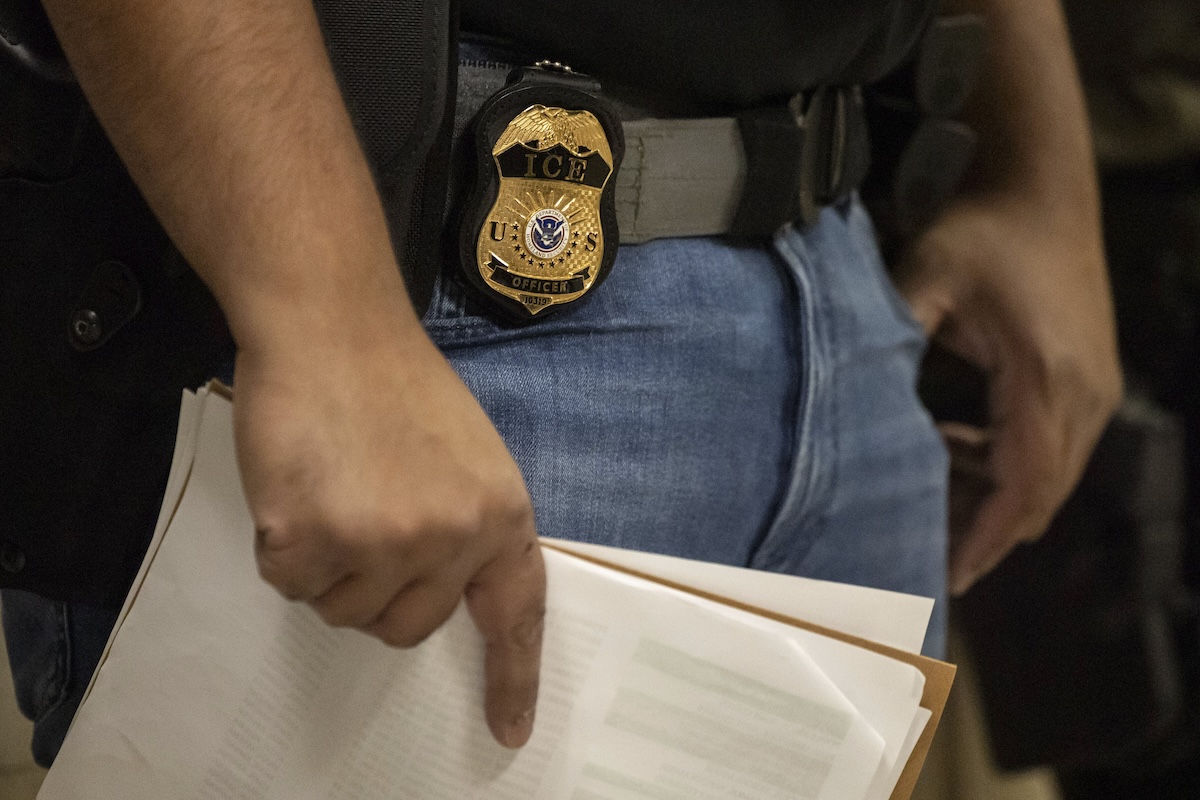
A federal agent wears an Immigration and Customs Enforcement badge while standing outside an immigration courtroom at the Jacob K. Javits Federal Building in New York, June 10, 2025. (AP)
A sudden, unexpected outcome
José’s dream of starting fresh in New York was short lived.
At the March 14 appointment, an ICE officer asked whether the brothers were contesting their removal order, and when José handed over their paperwork, the officer said, “‘This doesn’t work,’” José recounted.
Within minutes, the brothers were in handcuffs.
There’s no data about how many people have been arrested while attending required ICE check-ins, but news stories and social media clips are rife with examples of immigrants being detained and separated from family members. Lawyers have warned clients about the tactic. In San Diego, several immigrants are suing the government following their detention at check-ins.
Amoachi, who has worked as an immigration lawyer for 15 years, said before Trump’s second term, she had never seen a case like José’s and Josué’s — young men with deportation orders but no criminal convictions or gang affiliation and a pending application — end with detention.
About a week after the brothers were detained, Trump’s border czar Tom Homan said the administration was prioritizing criminals.
“We’re going to keep targeting the worst of the worst, which we’ve been doing since Day One, and deporting from the United States,” Homan said March 23.
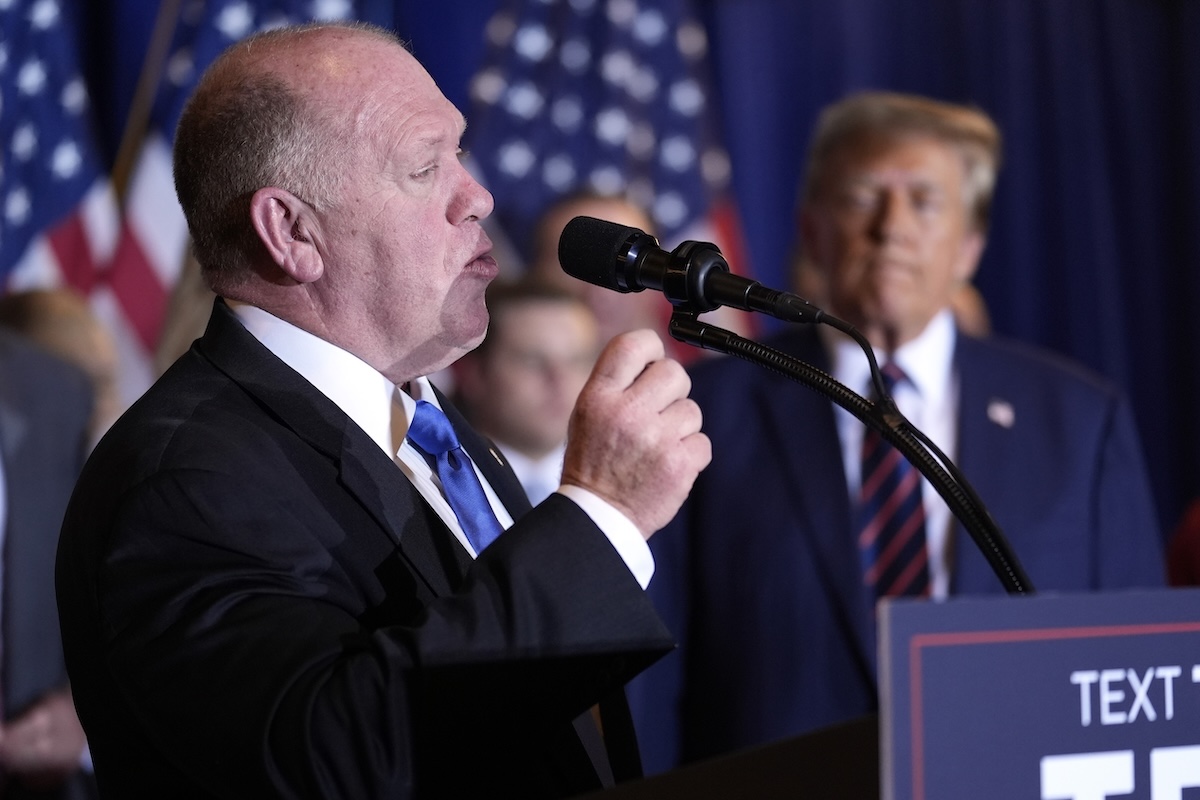
Homan speaks as Trump listens at a primary election night party in Nashua, New Hampshire, Jan. 23, 2024. (AP)
Leaving everything behind
Detention was the first leg in the two-month journey that would lead the brothers back to El Salvador.
Hours after the brothers were detained, immigration officers shackled them and took them to a Buffalo, New York, detention center.
In detention, José worked with a detained pastor to host weekly church services. Josué took a job in the kitchen — cleaning dishes and helping serve food — earning $1 a day. He used the money to call his mom or buy ramen, a delicacy in detention. Josué also taught English to fellow detainees and served as an unofficial translator for immigration officers.
On March 26, a New York family court judge ruled that José and Josué had been abandoned by their father and it was not in their best interest to return to El Salvador. Even so, they remained detained.
In early May, officers called in the brothers for processing, which would mean they’d either be deported or released, José said. Fellow detainees rooted for them.
The outcome wasn’t as hoped. The brothers were transported to Louisiana.
For several days, José and Josué stayed in holding cells dubbed “hieleras,” Spanish for “ice boxes,” with about 100 people in each. On May 7, their mother’s birthday, an officer called the brothers’ names to board a flight to El Salvador. Once on the plane, José said an officer entered with a separate list of names for people who could get off the flight. That was José’s last hope. But the brothers’ names weren’t called.
“When the plane took off, I knew I was leaving behind my mom,” José said. “Literally everything was staying behind. Our dreams. Everything.”
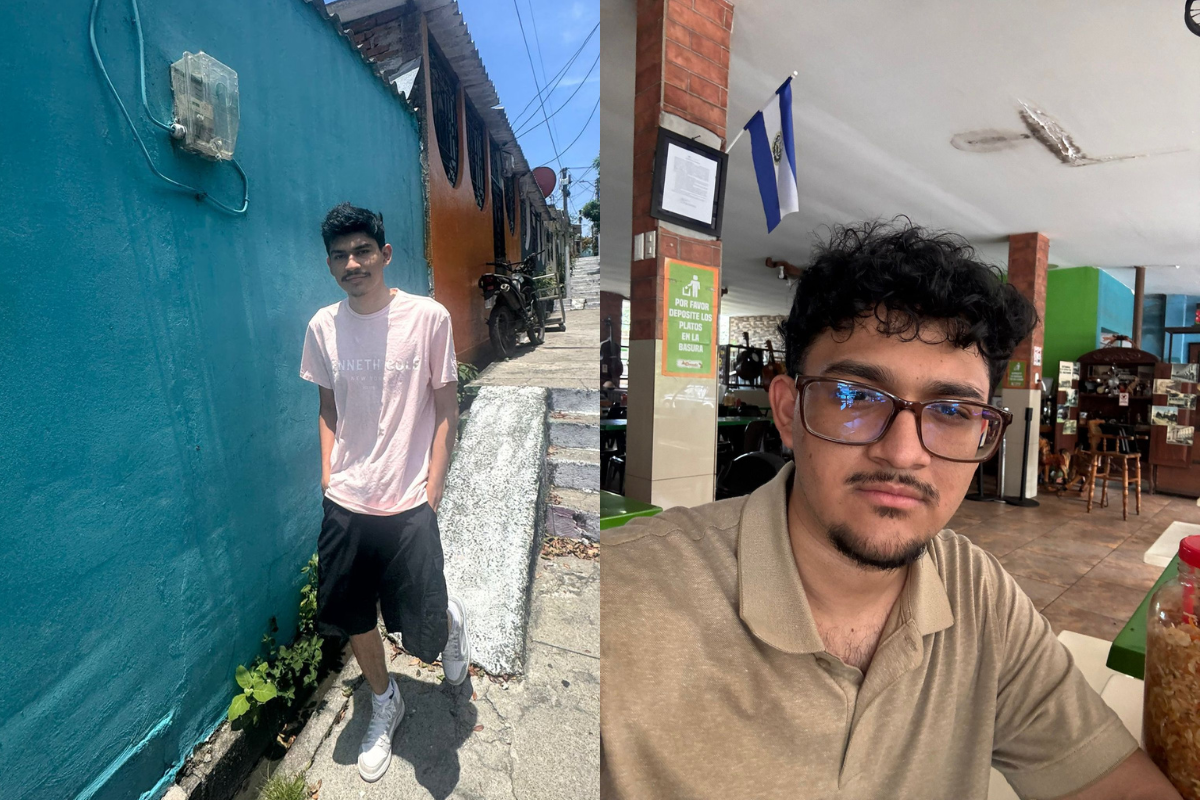
Josué Trejo López, left, and José Trejo López, right, in El Salvador, a country they fled in 2016 and where they have no family. (Courtesy of José Trejo López)
Stuck in limbo
Nine years after fleeing their home country, José and Josué, now 21 and 20, landed in El Salvador. They had no passports; U.S. immigration authorities had taken them when they applied for asylum and never returned them.
Authorities gave each brother a piece of paper with his name on it as a form of identification. When José and Josué arrived at an immigration processing center, they saw people waiting for U.S. deportees. No one was waiting for them.
“I looked at my brother and said, ‘Now what? What do we do?’” José said.
Their mother sent their grandmother’s childhood friend to pick them up. For the first few nights, the brothers couldn’t eat or sleep. They have since been diagnosed with PTSD and depression, Amoachi said.
A few weeks after José and Josué arrived in El Salvador, Josué’s high school in Georgia held its graduation ceremony. Rather than walking across the stage, he watched from his phone as they announced his name, and he cried in José’s arms.
Seven months after being deported, José and Josué yearn for the possibility of reuniting with their families. Amoachi has filed several appeals on their behalf.
José said the brothers followed the conditions: going to court, attending ICE check-ins, having good moral conduct and no criminal record.
“So what is the legal pathway?” José asked. “There isn’t one.”
PolitiFact Researcher Caryn Baird contributed to this report.
READ MORE: What to make of an abysmal year for truth? PolitiFact names 2025 the Year of the Lies
READ MORE: Year of the Lies: Farmer says some Trump tariff statements ‘as far from the truth as you can get’
READ MORE: Year of the Lies: How Trump’s talk about Tylenol, autism and vaccines affected one pediatrician
