


5 German Christmas Traditions 2025
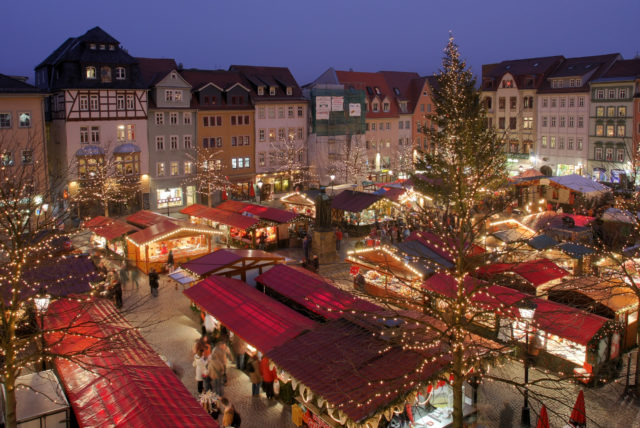
Christmas Market in Jena, Germany by Rene Schwietzke
In Germany, Christmas decorations appear before December 1. Many Germans take pleasure in beautiful scenes with the snow-covered straße (streets), colorful lights, Christmas-themed markets, and warm treats. My father’s side of the family is German, and we enjoy many German traditions. It is these country customs and the cultural heritage that make each nation unique. Enjoy reading about these annual German traditions that you may wish to celebrate.
- Advent Christmas Calendar Adventskalender: The unique German Christmas tradition consists of filling the Advent calendar with candies or chocolates. These calendars have individual treats hidden behind each day of the month. The idea is to open each pocket on the day as it occurs. The first Advent Calendar was printed in Germany in 1908 and has since gained popularity in the U.S. It serves as a daily reminder that Christmas is right around the corner.
- Advent Wreath or Adventskranz: Our wreath was hand-made by my father in the German tradition, with four large candles, pine cones, and berries. In the German custom, as lights were dimmed, our large family gathered around the table with the wreath and cherished our time together. Each Sunday before Christmas, a candle was lit until all four candles were ablaze. Depending on the family situation, some families sing Christmas carols, enjoy music, or watch films. Dinner may be served. The family may enjoy hot cocoa, tea, coffee, or glühwein. Stollen (referred to as Weihnachtsstollen or Christstollen at Christmas), cookies, marzipan chocolate, roasted chestnuts, and fruit are also popular.
- Christmas Markets or Weihnachtsmärkte: In a 15 century tradition, the historic city centers in the major German cities are transformed with Christmas markets or Weihnachtsmärkte, beginning in late November. Holiday decor and lighting attract residents and visitors to shop, people-watch, and sample the German food. Many other German cities and villages join the Christmas spirit by organizing themed pop-up markets called Christkindlmarkt. Throughout the month of December, in various locations around town, these markets offer warm traditional beverages such as mulled wine, local crafts, roasted chestnuts, gingerbread, and marzipan, an almond-based sweet ingredient used in holiday treats such as German Stollen. Experts estimate that over 2,500 Christmas markets exist across Germany.
- Nicholas Day or Sankt Nikolaus Tag: Saint Nicholas Day is a traditional holiday in certain German regions, especially in Bavaria, as well as other countries in Europe. Celebrated the night of December 5 up to the evening of December 6, the holiday consists of a family member or neighbor dressing as Saint Nicholas or der Heilige Nikolaus and delivering gifts to children. Although this traditional holiday and character might have inspired the resemblance to Santa Claus, they aren’t meant to be the same Christmas character.
- Christmas Eve: Known as Heiligabend in German, Christmas is the most important day in Germany’s holiday culture. December 24 is considered to be a regular work day; however, many businesses work for a half-day to prepare for the holiday celebration at midnight. On this day, families gather together to decorate the Christmas tree, sing Christmas carols, have a traditional Christmas meal, read stories about Jesus, and exchange gifts. Also, many German families attend a midnight mass called Christmette.
- Christmas Day: The 25 of December is usually a day to relax and enjoy with the family. Many people attend church services to enjoy time with family.
- Day After Christmas: December 26 or Der Zweite Weihnachtstag is also known as the second day of Christmas, a German legal holiday, and is a quiet day to recover.
- December 27 or Third Day of Christmas: Many Germans prepare for the winter sales that often begin on December 27, which is sometimes known as the third day of Christmas.
Sharon Schweitzer JD, is a cross-cultural trainer, etiquette expert, and the founder of Access to Culture. In addition to her accreditation in intercultural management from the HOFSTEDE Centre, she is an attorney, mediator, and Adjunct Professor of Law at South Texas College of Law. She also currently serves as the Chair of the Board of Trustees of the National Czech & Slovak Museum & Library. Sharon served as a Chinese Ceremonial Dining Etiquette Specialist in the documentary series Confucius was a Foodie, on Nat Geo People. Her Amazon #1 Best Selling book in International Business, Access to Asia: Your Multicultural Business Guide, won a coveted Kirkus Star, and was named to Kirkus Reviews’ Best Books. She’s a winner of numerous awards, including the British Airways International Trade Award at the Greater Austin Business Awards.
#InternationalCustomsExpert, #InternationalCustomsCoach, #CulturalTrainer, #CultureTrainer, #CultureCoach, #CulturalCoach, #CulturalExpert, #CultureExpert, #CulturalEtiquette, #CultureEtiquette, #EthnicEtiquette, #NationalTrainer, #NationalExpert, #GlobalTrainer, #InternationalTrainer, #GlobalEtiquette, #WorldEtiquette, #WorldCoach, #WorldEtiquetteCoach, #GlobalCoach, #GlobalEtiquetteCoach, #EtiquetteCoach, #Etiquette, #InternationalCoach, #InterculturalCoach, #InternationalEtiquette, #GlobalExpert, #InterculturalExpert, #InternationalExpert, #EtiquetteTrainingInAustin, #EtiquetteTraining, #TexasEtiquette, #TexasBusinessEtiquette, #Tradition, #GlobalTraditions, #InternationalTraditions, #Nationaldays, #NationalDaysInDecember, #DecemberCelebrations, #DecemberHolidays, #GlobalDecemberHolidays, #GlobalHolidays, #GlobalCelebrations, #GlobalTraditions, #InternationalTraditions, #GermanCelebrations, #GermanTraditions, #GermanHoliday, #GermanHolidays, #GermanyHoliday, #Straße, #AdventChristmasCalendar, #GermanChristmasTradition, #GermanChristmas, #ChristianCalendar, #GermanChristianCalendar
